Showing posts with label Disney. Show all posts

Monday, December 16, 2013

The Brilliance of ... "Mary Poppins"

THE BRILLIANCE OF ...

Yes. You heard me right. Mary Poppins is brilliant. And right now, you can definitely tell I'm a father. But I must confess that I've loved this Disney musical since before I had a kids! Based on the 1934 book series written by P.L. Travers, Mary Poppins tells the story of a magical nanny (Julie Andrews) who comes to watch over two nice, sweet children -- sister Jane (Karen Dotrice) and brother Michael (Matthew Garber) Banks -- who also happen to be somewhat emotionally ignored by their parents, George (David Tomlinson, one of my favorite underrated actors) and Winifred (Glynis Johns). Everyone who knows even slightly about the movie knows that songs are sung and wackiness ensues. But what most viewers are missing is a deep, underlying message in the story. 

1.) Saving Mr. Banks
At the end of the film, it is not so much the children Jane and Michael who are "saved" as it is their father George.

With the upcoming release of the Tom Hanks/Emma Thompson film about the making of Mary Poppins and the rift between Walt Disney (Hanks) and Travers (Thompson), it is great in knowing that Travers' true story of Poppins will come to the forefront in pop culture knowledge. Travers' (whose real name was Helen Lyndon Goff) father, Travers, was a bank manager (eventually demoted to bank clerk), much like the George Banks character in the book/film. Unfortunately, he died young in 1907 at age 43. And it is, what many Travers biographers say, her father who inspired the George Banks character in her book. 

Throughout the film, Banks is always "on schedule," thinks "children should be seen and not heard," does not believe in make-believe, and is only concerned about living a comfortable life with money and the perfect image (as evidenced in the songs "The Life I Lead," "A British Bank (The Life I Lead)" and "Fidelity Fiduciary Bank"). Even though all of the adults around him are welcoming to Poppins' magic and ways, it is Banks who consistently puts down her tactics and beliefs in raising children. It is not until the end of the film when he opens up about his dreams and fears to Bert (Dick Van Dyke), and then realizes, thanks to Burt, that -- despite his blaming Poppins -- his children will grow up one day -- it happens fast -- and not only will he not have the same time he has with them now, but they also  may "not have time for him" just like he never did with them. The movie reminds us, through the George character, that life doesn't have to be taken so seriously ... especially if you have kids, because time flies fast and our own mortality is just around the corner. This storyline reminds us of the truly important things in life.

As seen in the scene above, Banks says Poppins "tricked" him into spending time with kids. It is then that Bert delicately lays down the law.

It can be said that -- like that cheesy reality show Nanny 9-1-1 -- Poppins was there to save Mr. Banks ... and ultimately his entire family. One cannot think of the "happy ending" in Poppins and not think about how Travers herself most likely yearned for her father while she was growing up (he died when she was only 7). The origin for Poppins came to Travers when she was a little girl, writing stories for her little sisters, and at a time when her father was being demoted, was an alcoholic, died and left her family destitute; her mother became hysterically overcome with grief, leaving her emotionally unbalanced (Picardie 2008). 

As shown in the 2013 movie, Saving Mr. Banks (to be released December 20, 2013), Travers was extremely annoyed with Walt Disney when she read what screenwriters Bill Walsh and Don DaGradi had come up with. The songs plus the inclusion of the cartoon world (i.e., penguins, race horses, etc.) especially irritated her. It is legend that after viewing the movie at its premiere (to which the author was not invited), Travers cried ... out of disappointment!

2.) The Music

Written by brothers Richard and Robert Sherman, the music for Mary Poppins follows a certain leitmotif. This theme is introduced in the song "The Life I Lead" and is appropriately heard throughout most of George Banks' songs -- even more proof that the story is just as much about him as it is about the children. For those who don't know the brilliant Sherman brothers' work, you do; you just don't know it. They've written songs for classic animated movies The Jungle Book, The Many Adventures of Winnie the Pooh, The AristoCats, The Sword in the Stone, Charlotte's Web, as well as live-action movies Chitty Chitty Bang Bang, The Parent Trap, Bedknobs and Broomsticks, the Disney park staple song "It's a Small  World (After All)" and the 1960 Johnny Burnette hit song "You're Sixteen." Their legacy was covered in the 2009 documentary The Boys: The Sherman Brothers' Story, and I consider them two of the most prolific songwriters in music history.

Recently, The Hollywood Reporter attended a special sing-along with Richard Sherman (sadly, his brother Robert passed away last year), and asked him about he and his brother's first introduction to Mary Poppins. According to the Reporter article, "Sherman remembered that he and his brother had been called in for a 10-minute meeting with Walt Disney to discuss the project, but the meeting ended up running for two hours because they discussed in great detail the chapters of the Poppins novel. At one point they played some notes from a song that would become 'Feed the Birds' -- which, in turn, would become Disney's personal favorite song -- 'and he gave us our job,' Sherman said."

The Sherman brothers also convinced Disney to change the setting from the depression of the 1930s (which is what is in the book) to the Edwardian rule of 1910 England. This caused more of a rift with author Travers as she then only wanted classic music pieces that were popular during that time period. Luckily, the Sherman brothers stuck to their guns and what is delivered are some of the most popular, recognizable music of our time! The Sherman brothers used the music to their advantage when it came to advancing the women's civil rights movement -- through Mrs. Banks' song "Sister Suffragette," which puts her at odds with her husband (who does not believe in the women's right to vote), although she never voices her opposition and tries to go along with his "merry life" he leads. All of the songs -- especially "The Life I Lead," "A Spoonful of Sugar," "Jolly Holiday," "Supercalifragilisticexpialidocious," "I Love to Laugh," "Feed the Birds," "Chim Chim Cher-ee," "Step in Time," and "Let's Go Fly a Kite" -- are catchy, superb songs that capture every young person's ear and stays with them through the years.

To this day, the Mary Poppins soundtrack remains one of my most favorites! I sing "Feed the Birds" to my young daughters right before bedtime. In fact, "Feed the Birds" -- like Mr. Disney -- is one of my favorite songs of all time. Disguised as a mere ballad or lullaby about a bag-lady who sells bird feed, the song is about so much more. The song is not just about feeding birds. The birds represent mankind -- particularly the poor and meek -- and the message is that no matter what amount, whether monetary or material, we can all give of ourselves to help our fellow man. It is a God-like thing we can all do, and is represented in the lyric: "All around the cathedral the saints and apostles/Look down as she sells her wares/Although you can't see it,/You know they are smiling/Each time someone shows that he cares." Take that element, along with Julie Andrews' beautiful voice, and it is no wonder the film won an Academy Award/Oscar for best music!


 3.) A Trailblazing Author

Before there was J.K. Rowling, Harper Lee, or Flannery O'Connor, there was Helen Lyndon Goff, who would change her name to P.L. Travers. Some of her detractors thought of her as a "cold" woman, but she had quite the career. In the early 1920s, Travers was an actress, touring throughout Australia and New Zealand with a Shakespearean company, while also writing and publishing poems. In the early 1930s, she moved into a cottage in Sussex, England, and began writing Mary Poppins, which was eventually published in 1934. Even though the first story was officially published in 1934, Travers had early composition books from her childhood which held Mary Poppins stories she had written for her younger sisters.

During World War II, Travers lived in Manhattan, where she worked for the British Ministry of Information (England's publicity and propaganda machine), and was approached by Walt Disney's older brother and business partner Roy Disney about selling Poppins to Disney Studios in order to make a film. Whereas most authors would jump at the chance, Travers was hesitant. For more than 20 years, Walt Disney periodically made efforts to convince Travers to allow him to make a Poppins film. He finally succeeded in 1961, although Travers demanded and got script approval rights. Planning the film and composing the songs took about two years. Travers objected to a number of elements that actually made it into the film. Somehow, Disney was able to attain the rights and the relationship between he and Travers was "icy." Later, in 1993, when Broadway producer Cameron Mackintosh met with Travers -- who was in her 90s -- to acquire rights to make a Broadway musical adaptation of Mary Poppins, Travers said he could do it on one condition: only English-born writers and no one from the Disney film production were to be directly involved with the creative process of the stage musical. Thus, Downton Abbey creator/writer Julian Fellowes wrote the adaptation.

In her personal life, Travers was known to have romantic relationships with both men and women, and, at the age of 40, she adopted an Irish boy named Camillus Hone. She never married and, in a time when being a single parent was unheard of, she did just that. Her character Mary Poppins is a testament to a strong female character and paved the way for many other such characters -- in both realism and fantasy.

4.) Groundbreaking Technology

Before Mary Poppins came on the scene in 1964, only two prior films had mixed live-action actors with animated characters: first, in 1945, with Anchors Aweigh, which featured Gene Kelly dancing with Jerry the mouse (from Tom and Jerry); and, second, in 1946, with Disney's Song of the South, which featured actor James Baskett interacting with an entire animated world. While the former found Jerry being drawn onto the live-action film, the latter was not very popular and did not really get much notice from audiences. But when Poppins came along, critics, audiences and filmmakers alike all noticed the mixed cartoon/live stage world that Poppins, Bert, and the children stepped into.

The technology used in Poppins and its predecessors would be used to make films such as Who Framed Roger Rabbit? and would go on to inspire special FX artists -- and even computer graphic artists -- around the world. If it weren't for Poppins, it's safe to say that this technology may have taken even longer to get off the ground. 

What's more important than technological advance, though, is how it sparked every viewer's imagination. Watching the actors interact with cartoon characters made the viewer believe these characters were in an animated world and it helped the film all the more for it.


Just a few years ago, I was eager to show my daughters Mary Poppins and continue the tradition started when I was a kid. For its great music, animation, lively story and spark of imagination, Mary Poppins is a brilliant film!


Friday, July 19, 2013

The Modern-Day Fairy Tale Dilemma


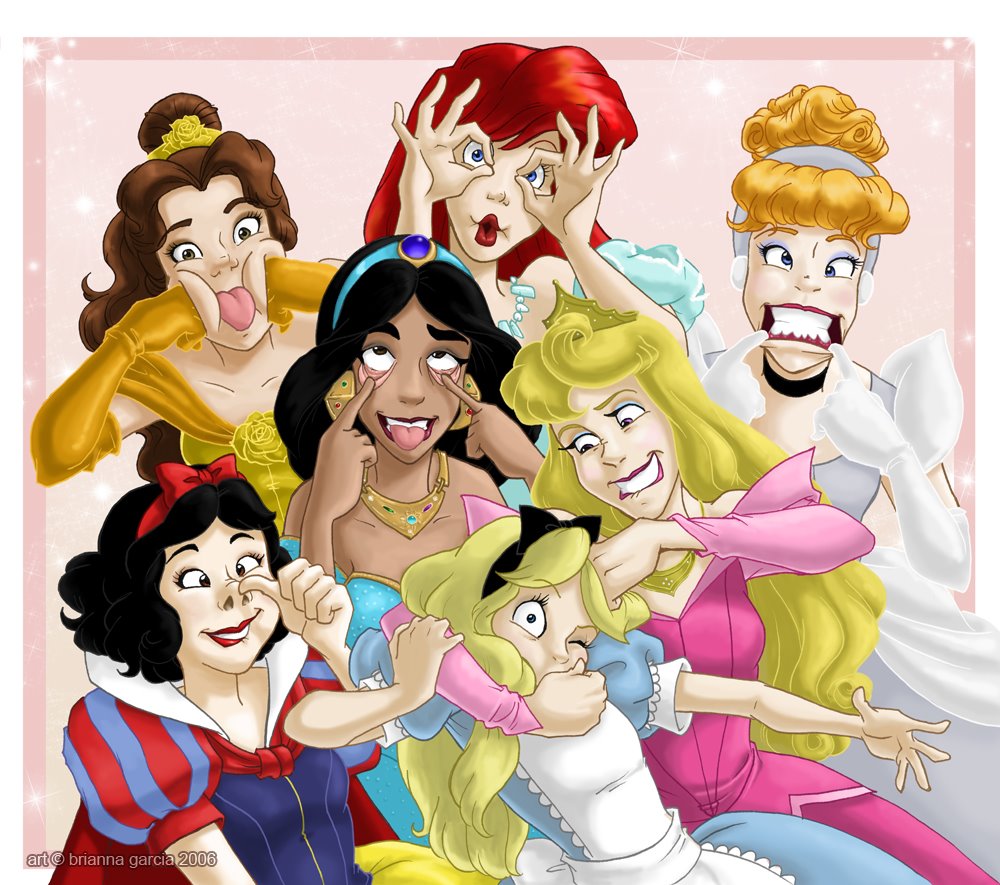
As a writer and someone who is greatly moved and influenced by the written word -- both in print and spoken word -- I recognize the extreme importance of Einstein's quote above. Like a majority of kids in my generation and those that have followed, the fairy tales I was raised on were transformed into Disney's classic cartoon films: Cinderella, Sleeping Beauty, Snow White, The Little Mermaid, etc. Lately, there has been a lot of ruckus about how these classic films are portraying women and thus teaching young girls how to think about and perceive their purpose in life and male-female relationships. I'm not quite sure little girls ages two through nine can actually perceive the complexities of The Little Mermaid's Ariel being willing to sell a part of herself in order to marry a man, or the idea that a woman must be quiet in order to obtain a man's love. These concerns over how women are treated or portrayed in these films was not always there. Back in 1937, 1950, 1959, and even 1989, no one made a fuss over any of these storylines. I was raised on these same films and never thought a woman was more attractive if she was submissive. 

However, in the 2006 New York Times Magazine article, “What’s Wrong with Cinderella?” feminist writer Peggy Orenstein mentions her disagreement with the entire "Princess culture." When her three-year-old daughter was often called a princess, Orenstein set out in her article to explore the development and ongoing popularity of the Disney Princess merchandise line. As a result, Orenstein found the reason for the creation of the line, but she only briefly touched upon the effect that admiring Disney princesses had on a young generation of girls. She stated:

“There is evidence that young women who hold the most conventionally feminine beliefs – who avoid conflict and think they should be perpetually nice and pretty – are more likely to be depressed than others and less likely to use contraception. What’s more, the 23 percent decline in girls’ participation in sports and other vigorous activity between middle and high school has been linked to their sense that athletics is unfeminine” (Orenstein, 2006).

But, again, do little girls recognize these same issues (although, their parents sure will!)? In an American Psychologist article entitled “The development of children's knowledge about the appearance–reality distinction,” writer John H. Flavell concluded that “findings suggest that many 3-year-olds seem to possess little or no understanding of the distinction and are unresponsive to training. At this age level, skill in solving simple appearance–reality tasks is highly correlated with skill in solving simple visual perspective-taking tasks” (Flavell, 1986). Furthermore, “[i]t is noted that, while children of 6-7 years manage simple appearance-reality tasks with ease, they have great difficulty reflecting on and talking about such appearance-reality notions as ‘looks like,’ ‘really and truly,’ and especially, ‘looks different from the way it really and truly is’” (Flavell, 1986). These age ranges (three to seven) are a prime target for the Disney princess movies and merchandise, and are the ages that find most children repeatedly watching the films. With violence, bad language and sex in the media being extremely influential toward impressionable youths, it is easy to see that particular values strewn throughout the Disney princess films are equally influential in how children perceive materialism as well as the ideas of love, marriage, gender roles in society.

Mr. Flavell's findings are just the slightest cause for concern with most parents who believe the concept that these early Disney princess fairy tale movies teach -- that being it's the man often has to rescue the woman and she should be grateful for it. There's plenty more research available out there to make their concerns grow. Don't believe me? Think I'm making this up? When searching the internet, entering "problem with Disney princesses," this is what pops up:


As a father of two daughters this distresses me, to say the least. I've known about these issues long before this picture graced my computer screen. I've even closely examined other Disney movies and how certain aspects of them can be perceived in a negative light. But I also don't want to rob my girls of the same fairy tales I had when I was growing up; after all, it didn't damage me or my perception of girls/women. My youngest daughter loves the princess movies and loves the dresses ... which is fine. But I don't want her to ever think that a man needs to swoop in and solve her problems for her. Or that just because a man buys her things or treats her with the dignity and respect she regularly deserves all the time means she has to start a relationship with him. Now, granted, the man she falls in love with should definitely treat her with respect, but her thought process shouldn't include falling in love for every guy that treats her -- or appears to treat her -- nice. Princesses like Cinderella, Sleeping Beauty, Snow White, Jasmine (Aladdin), and Belle (Beauty and the Beast) all have messages of the princess needing to be saved by the gratuitous handsome prince. And these are the most popular Disney princess films! However, notice the princess movies in which the princess either did not need saving by a prince, decided to not ride off into the sunset with a man, or insists on being treated equally to a man, are the movies that are the least popular (i.e., not as well marketed, received poor reviews, low DVD sales, etc.). Such princesses are Mulan, Pocahontas, Tiana (The Princess and the Frog), Rapunzel (Tangled), and, more recently, Merida (Brave), as well as sisters Anna and Elsa (Frozen). Oftentimes, people like a good "damsel-in-distress" film (this is the formula for a majority of live-action romantic comedies and action films today). At least Disney does offer an equal counterpoint in Mulan, Pocahontas, Tiana, Rapunzel, Merida, Elsa and Anna. However, what is troubling is when Disney tries to do this:

Disney recently gave a makeover to Merida, the protagonist of the 2013 Academy Award-winning film Brave. The Merida on the left is the one seen in the film. The Merida on the right is what Disney was trying to have show on their princess website and on their retail (clothes, toys) items. Parents-in-arms voiced their strong opposition over this new Merida and her plunging neckline and more "physically attractive features." Soon after, the traditional Merida is who is featured on Disney's princess web site; however, some images of the Merida on the right still appear in other places (i.e., banners, toys, etc.).

Merida is perhaps the best princess for a new generation of girls/young women in that her film is not about a man saving her from some evil villain. In fact, it does not have a main villain at all and thus does not require her being saved (most critics panned the film because of that very theme). The film is a bonding film between mother and daughter, in which a daughter has to rescue her mother from a curse the daughter herself naively caused. In other words, Brave is about something bigger than good vs. evil. It's about personal responsibility, being yourself, independence, true beauty, loving and honoring your family, and a bit of rebellion. In other words, it's about growing up.


 As the video above proves, Merida does not believe in traditional conventions or needing to be married to make a difference. As she rips off her constraining ceremonial dress (a metaphor for shaking off the traditions of an old-fashioned society), she competes for her own hand in marriage and outperforms the "men" who are considered her potential husbands. But it's not merely this clip that makes Brave so great. What makes the film and her so great is the same thing that makes all strong female characters -- whether it be Merida, Buffy, Starbuck, Supergirl, Ripley, Sydney Bristow, Eowyn, Jane Eyre, Lois Lane (especially the Smallville version), or Hermione. She is strong-willed and has interests in which she has the need to excel, is independent and smart, feminine and tough-as-nails, loves her family, has her own sense of style as well as many hopes and dreams, but she is also at times vulnerable, humble and scared, which makes her endearing and relatable. Merida's long red locks are somewhat uncontrollable -- just like her fiery personality -- and she knows her life is meant for more than merely being someone's wife. All of these traits are what make her beautiful. It's what makes her real.  

I recently interviewed fellow writer Kelly Meding about the roles of females in books and film. Meding is an urban fantasy (UF) writer and the author of the Dreg City Series (Three Days to Dead, As Lie the Dead, Another Kind of Dead, and Wrong Side of Dead), as well as the Metawar Series (Trance, Changeling, and Tempest). Meding lists some of her early memories of film and fiction as Return of the Jedi, The Neverending Story, Legend, Superman 1-4, Star Wars; "I watched Tales from the Crypt and other horror movies with my dad. I saw Slaughter High (alone) when I was nine. I think it's the 'otherness' that attracted me to them. Reality was so … boring, but how cool was it to read a book that magically sucked you into the main character's adventures? I believed a man could fly." 

Regarding Disney princesses, Meding said, "I grew up watching the Disney classics. As a young girl, it's easy to fall into the dream of being swept away by your prince charming and living happily ever after. I think it's part of the beauty of being a child -- that age of innocence when you can believe in simple things. There are almost three categories of princesses in the names you listed. You have 'Helpless Princess' (Snow White, Cinderella and Sleeping Beauty) who didn't do much besides sing and look pretty for their future prince. Then you have 'Sassy Princess' (Ariel, Belle, Jasmine), who dream bigger than their current situation and actually take steps toward new things. Finally you have 'Millenial Princesses,' who are Disney's attempt to make the heroine more adventurous, braver, and more active in the story. Pocahontas stops a war. Mulan goes to war and saves China. Rapunzel decides to see the lights and she goes to see the lights. I don't think there's anything wrong with it, as long as you're also teaching your child (boy or girl) that you don't have to wait for someone to save you. You can be your own hero. But that's the same thing with any movie or TV show you let your child watch -- know what they're watching and be prepared to answer questions."

Never be afraid to let your silliness and uniqueness come out!
When asked about the female characters who inspired her both as a writer and as a woman, Meding said, "Is it a cliché if I say Buffy Summers? With that character, Joss Whedon took a trope and not only turned it on its head, he kicked the crap out of it and sent it away crying. So many of his female characters are strong, but they are strong in different ways. Willow didn't go out and physically kick ass, but she stood by her friends, she investigated, and she never backed down from an apocalypse.

"As a kid, Lois Lane (as portrayed by Margot Kidder) inspired me. Sure, Superman needed to save her from a falling helicopter, or a falling elevator once in a while. But Lois was headstrong. She knew she was good at her job, she didn't let anyone keep her from doing her job, and she didn't back down from her male boss. I think Aaron Sorkin also does female characters well. I'm a huge fan of The West Wing, and all of those female characters can go head to head with their male counterparts. They're never portrayed as 'less than' anyone else."

Keep your pop divas & reality star role models; we have your own.

Those previously-mentioned fictional females are just a few obvious strong women. However, sometimes there are strong women characters that have been hiding right under our noses. One such female character has been lying anonymously dormant for many years -- 74 years, to be exact. The Wizard of Oz's Dorothy Gale (Judy Garland) may have first graced printed pages in 1900, but it is the 1939 cinematic classic which made her a household name! Now, I know what most may say. "Are you kidding me!? Dorothy is surrounded by three men throughout the entire film! They have to sneak into the Witch's castle to save her!" To this, I say that, yes, the three male friends (Scarecrow, Tin Man, and Cowardly Lion) come to rescue her. However, she does not ride off into the sunset to marry them. She does not betroth herself to either one of them. They save her out of friendship alone. And why? Because it is merely a reflection of the friendship she has shown them throughout the film. Let's not forget that it is Dorothy who ultimately invites each one of them to join her on her voyage to Emerald City. Her kindliness and friendship are what ultimately save her life. When any of her three friends put themselves down or are unsure of themselves, Dorothy is the one who encourages them. Dorothy stands up to the seemingly scary (at first) Cowardly Lion, bopping him on the nose for trying to attack her dog, Toto. Dorothy is the one who inadvertently destroys the Wicked Witch of the West because she is trying to save Scarecrow's life. Dorothy -- it is revealed at the end -- is the one who ultimately had the power to go home all along. In fact, when you truly think about it, it is the women -- Dorothy, Aunt Em (who's bossing everyone around and the real boss of the farm?), Miss Gulch, Glinda the Good Witch, the Wicked Witch of the West -- who mostly have the power in The Wizard of Oz. If you need more proof, what does the "all-powerful wizard" turn out to be? A crusty, old charlatan who uses special effects, hiding behind a curtain. And, if you really wanted to delve deeper into analyzing Dorothy's male friends, it is first shown that one is brainless, one is heartless, and one is a coward. So, yes, while Dorothy is not as bad-ass tough as most of the aforementioned female characters; nevertheless, she belongs in the category for merely being a good female role model.

Imagine if The Wizard of Oz was advertised this way! Then Dorothy would be one big bad-ass!

It is not necessary for a good story and/or fairy tale to make the males of the piece cowards, macho, idiots, and/or selfish. A great story can treat both sexes with equal respect. One of the best examples of this is Disney's Tangled, which features the princess Rapunzel. For those who haven't seen this movie and want to, please skip down to the next paragraph as there will be spoilers. Even though the movie starts out with all of the trappings of a typical hero-rescues-a-damsel-in-distress, the story takes a different route. At the end of Tangled, the big reveal is that Rapunzel has been imprisoned all of her young life by an enchantress (Mother Gothel) who stole Rapunzel from her royal cradle when she was a baby. Rapunzel's magic hair keeps Mother Gothel young and although Rapunzel bravely refuses to do Gothel's bidding, when Rapunzel's love interest Flynn comes to rescue her, Gothel stabs Flynn. Rapunzel makes a deal with Gothel, telling her that if Gothel lets Rapunzel heal Flynn, Rapunzel will willingly go with Gothel and continue to make her young. However, knowing Rapunzel would lose the freedom she had spent the entire movie fighting for and all of her life yearning for, Flynn -- after professing his love for her -- selflessly sacrifices his life by cutting Rapunzel's hair so she cannot perform the healing spell on him. Flynn's single act of sacrifice  gives Rapunzel not just her true family back but also her freedom from a life of servitude to Gothel, whose age quickly catches up with her and destroys her.

In Disney's latest, Frozen, when Elsa inadvertantly freezes her kingdom, it is up to her little sister, Anna, to find Elsa and try to get her to lift the frozen curse. In her anger, Elsa accidentally strikes Anna in the heart, freezing it and placing a curse on Anna. Anna and her friends are told the only way to stop the effects on Anna's heart is "an act of true love." What Anna's friends -- and the audience -- think of as "an act of true love" turns out to not be valid. It is not until near the end -- when the sisters sacrifice -- that the "true love act" is revealed. Frozen addresses topics such as what it means -- and feels -- to be different (as evidenced in Elsa's "special talent"), and the love in the film is a love that is more important than any romantic love -- it's unconditional love. The film also touches on important aspects such as humility, selflessness and what it means to truly forgive and love.

Disney's new generation of princesses (l. to r.): Mulan, Pocahontas, Tiana, Rapunzel, Merida, Anna, Elsa: Ever notice the princesses (except Rapunzel, Anna, & Elsa) that are ethnic are the ones whose movies have the lowest ticket sales and the lowest popularity? However, it's not their ethnicity which makes them positive role models -- it's their story and personality!

Other Disney princesses with admirable stories include Pocahontas, who teaches Englishman John Smith the value of the land and the true meaning of home and respecting human life, as well as choosing to remain with her family at the end of the movie rather than return to England with Smith; Mulan, who disguises as a man to join her country's army and fight the savage killers who are pillaging her land; and Tiana, who works hard day and night to save money to open her own restaurant and refuses the help of two men (one a voodoo witch doctor, the other a prince!) to achieve her goal.  When asked about the importance of strong female characters in mass media (TV, books, film), Meding said, "Strong female characters in media are important to me, because one day I want us to be able to stop using that phrase. I want them to just be female characters. The simple fact that there are female characters versus strong female characters is irritating. It's as though the assumption is unless we specify the woman is strong, we must automatically assume she's weak. And I hate that. I also think it's important, because it gives girls and adult women heroes to look up to who aren't men. Heroes who stand up for themselves, who kick a little ass, and who don't sit around waiting to be saved. Women aren't helpless. Sometimes we need that reinforced in our media, instead of constantly being told we aren't thin enough, pretty enough, perfect enough." But let's not be so hard on just Disney's princesses. Many romantic comedies today as well as sitcoms on TV sadly revolve around plots in which the female is portrayed as either wanting to fall in love and live happily-ever-after, or surprisingly falling in love in relation to the "Taming of the Shrew syndrome." Being a parent of two daughters, I can dismiss any negative connotations that Snow White or Belle may give my young daughters as I'm sure they do not read as deeply into the psychological or philosophical meaning of the stories as much as us adults do. However, I can't help but make sure they know that waiting for someone to do something for them is not OK, and that if a boy hits them or shoves them or constantly insults them, it is not because he likes them. As I said in a previous post, to me, that is breeding ground for them growing up, thinking a boy/man who treats them like shit secretly likes/loves them. True or not, I don't want a boy showing his affections to either of my daughters in such a way. This opening scene from the romantic comedy film He's Just Not That Into You perfectly conveys the problem I'm discussing:


However, the biases of a woman's "place" in society and relationships does not just start with fairy tales and/or adult movies/books. It starts with earlier literature too! Beware the lessons learned from some pre-teen/tween/young adult novels. I call it: The "Bella Conundrum."


This about sums it up.

Unfortunately, there are popular female characters aimed toward pre-teen, teen and young adult girls -- when they are in their "formidable years" -- that subliminally teach a bad lesson to them. A majority of young women today seem to gravitate toward Bella Swan from the Twilight young adult novel series. Bella is constantly suffering over her "love" for her vampire boyfriend Edward, and goes into a deep depression when he leaves her halfway through the series -- during which time she gets close to another boyfriend, Jacob. In the end (spoiler alert), Bella decides to become a vampire so that she can live happily ever after with Edward, and when they have a child together, the little baby girl's soul "imprints" with Bella's other love interest Jacob (the werewolf), meaning Jacob and the baby are soul mates. I don't even want to know where it goes from there. Uggghhhh (shutter). While Bella may be a bad influence, strong female characters don't have to be perfect. In fact, it is their flaws which make them relatable to others. But they do have to learn from their mistakes and take that knowledge with them; Carrie Bradshaw is best when it comes to this. Hell, even Starbuck does crazy stuff! Sadly, though, learning from mistakes and being selfless is something that is sorely missing from Bella Swan and many other characters found in a majority of today's pop culture media and mainstream stories -- something I call the "Bella Conundrum."

Josh Radnor (of How I Met Your Mother) gets the dreadfulness of Twilight's writing in his film Liberal Arts. Why doesn't everyone else?

Meding hopes her female characters will help fill the role of being strong, making mistakes and being selfless. "I hope they [her characters Evy Stone, Dahlia Perkins, Trance West] show readers that you can be strong and active in your own fate, while still wanting to share your life with someone," Meding said. "Evy is a very damaged character. She's a fighter who is afraid to let anyone close, but she also has an emotional side that wants a connection to another human being. A character can be both strong and feminine, and I think that's a careful balance many UF writers I know grapple with. [If a female character is] Too strong, she's a bitch; [if a female character is] too girly, she's a wimp." When it comes to my "Bella Conundrum," Meding agrees: "I hate the message that Bella sends to girls. That it's okay for a guy to get possessive, stalk you, and take over your life, because he says he loves you. That any guy is worth killing yourself over. That's okay to be passive and let your man do all your fighting. That you should change a big part of yourself (lose your humanity, in Bella's case) for a guy. It's infuriating, and I'm very glad to see Bella passing us by, and to see active heroines like Katniss Everdeen taking her place." Personally, give me a Buffy Summers, a Zoe Washburne, a Fat Amy (Rebel Wilson's character from Pitch Perfect), an Emma Swan, a Jo March, or a Megan (Melissa McCarthy's character from Bridesmaids)!


Just a few of the fictional female characters that are portrayed in a strong, positive light in today's media. (top, l. to r.) Buffy Summers, Kara "Starbuck" Thrace, Kara "Supergirl" Zor-El, Ellen Ripley, Fat Amy, (bottom, l. to r.) Sydney Bristow, Eowyn, Jane Eyre, Lois Lane, Hermione Granger, and Megan.
Take a lesson from Megan about life ...


Today, there are plenty of fairy tales and fiction with good, strong female characters. Our job as parents is to weed through all of the other trite, stereotypical entertainment and make sure our children know right from wrong -- the same as if they were watching violence or sex. 

Fortunately, with characters like the ones pictured above, I've got plenty of positive female characters to point my daughters toward when they're old enough and interested enough. Hermione has already been introduced to them both and I'm looking forward to all of the other characters to follow! Yes, we still watch Snow White and Cinderella. But we also watch Wizard of Oz, Star Wars, Jem (remember her?), Tinker Bell, Curious George and regular cartoons to keep satisfied.


"Broad acceptance will come when society really begins to change. When we can move past the antiquated notion that a woman's place is in the kitchen, rather than in the workplace," Meding said. "When we can accept that women are equal to men, and that we actually outnumber them. When female Senators can stand up and not be told (in so many words) to sit down and shut up by their male colleagues. Take a risk on an action flick starring a superheroine instead of another male hero reboot. The Hunger Games proves that a woman can carry an action blockbuster and that people want to see it. "But as readers and movie-goers, we vote with our dollars. If Superman keeps making eight-digit opening numbers, Hollywood will keep making those kinds of movies. If Twilight-esque books starring Bella clones are making publishers billions of dollars, they'll keep publishing them. Media provides what they think we want to see, so we need to do a better job of showing them what we want. Change often happens slowly, over time. Like I said above, maybe one day we'll only have to say 'female character' and it'll always mean strong." As for now, it's good to see that Disney is headed down the right track. After all, any company that could produce Once Upon a Time (one of the best shows about fairy tales and gender roles) and promote this video below, proves that the company is headed in the right direction and that they can't be doing all that bad:


SPECIAL THANKS TO AN AWESOME LADY & WONDERFUL WRITER:

Kelly Meding, whose books can be purchased on Amazon.com and in most bookstores. Where you can check her out on the Web: Kellymeding.com, her blog Organized Chaos, on Twitter and Pinterest


Works Cited
Flavell, John H. (1986). The development of children's knowledge about the appearance–reality distinction. American Psychologist, 41(4), 418-425.

People Who Actually Read This